Ditch Vegetables for Babies
When babies begin solids, many parents are guided toward vegetables, fruits, or purées as a starting point.
This approach is often framed as gentle, appropriate, or protective.
This has never been how I have approached introducing solids with my children.
First foods shape nutritional status during one of the most metabolically active periods of life. In the first years, the brain is undergoing rapid expansion, neural connections are forming at extraordinary speed, blood volume is increasing, bones are lengthening, and endocrine pathways are being established.
This is a period defined by demand, and demand calls for density.
A baby’s stomach capacity is small. Their requirements, comparatively, are not. This creates a simple but often overlooked tension; every mouthful carries weight. When foods are low in available nutrients relative to their volume, they displace the very building blocks required for development.
Essential Nutrients for Development
Iron, cholesterol, choline, zinc, retinol, amino acids, and nourishing fats are not optional at this stage. They are foundational. They underpin cognitive development, support stable blood glucose, contribute to hormonal maturation, and allow physical growth to proceed without compromise.
When these nutrients are not consistently supplied in forms a baby can readily utilise, the body adapts. It prioritises and compensates. Over time, these adaptations can shape appetite, energy regulation, and even food preference.
This is why I do not think it is wise to start with foods that are predominantly fibre and water.
These are the foods I return to when introducing solids.
Egg Yolks
Egg yolks offer choline, which plays a central role in memory and brain architecture, alongside cholesterol, which supports cellular formation and hormone production. They also provide fat-soluble vitamins and highly bioavailable protein. Lightly cooked yolks are gentle, easy to manage texturally, and deeply nourishing.
Slow-Cooked Red Meat
Cuts such as shank, brisket, and osso bucco, cooked until they fall apart between your fingers, provide haem iron in a bioavailable form the body recognises and absorbs efficiently. This becomes particularly relevant as a baby’s iron stores, carried over from pregnancy, begin to decline around 6 months of age. Alongside iron, red meat delivers zinc and complete amino acids, supporting both immune function and structural growth.
Liver
Few foods offer the same concentration of retinol, folate, copper, and B12. These nutrients are required in small but meaningful amounts, and liver provides them in a form that is both potent and usable. I favour frequency over volume; small amounts incorporated into mince or prepared as a smooth pâté allow for regular inclusion without overwhelming the palate.
Bone Marrow
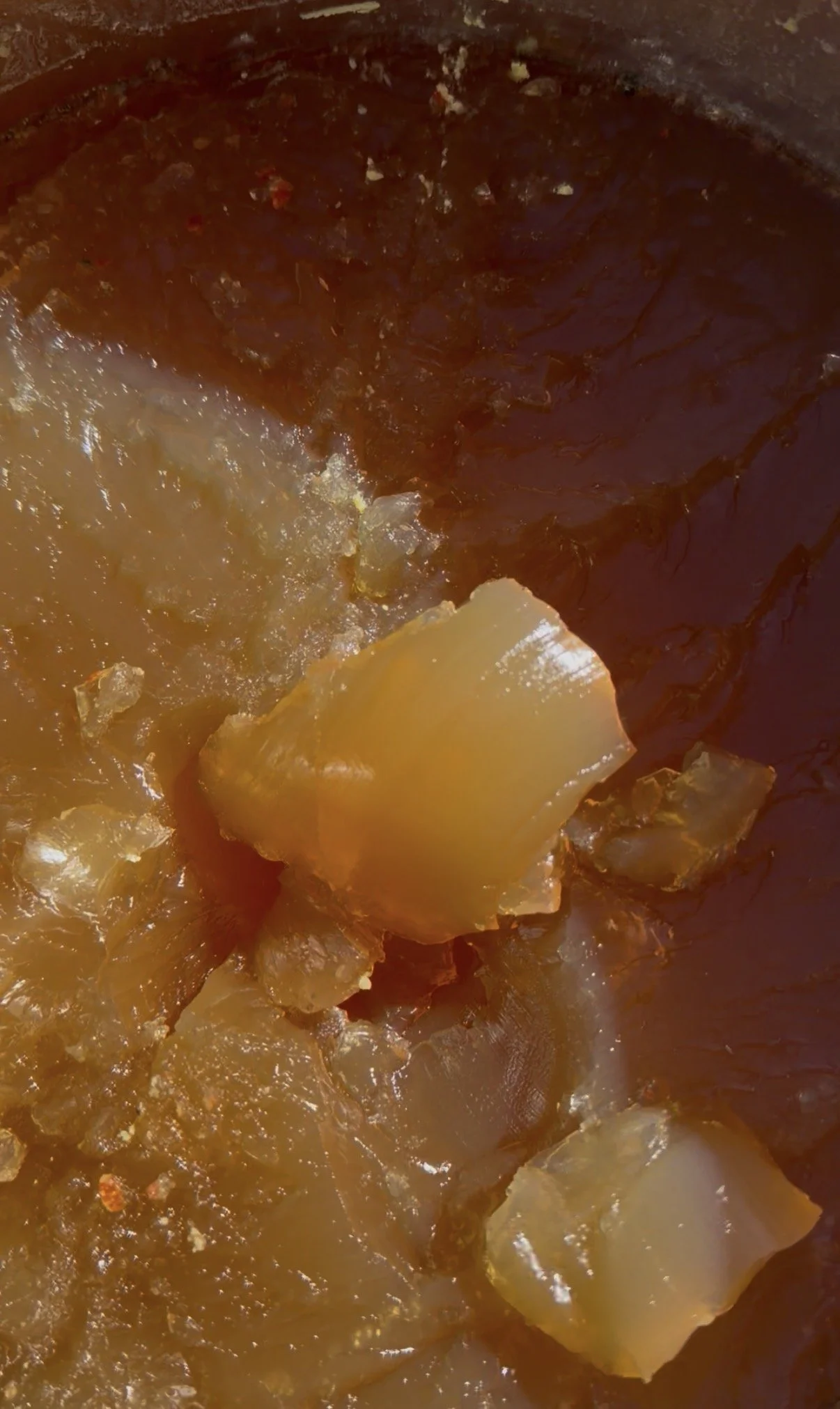
Bone marrow provides energy-dense fats that support the developing brain, along with fat-soluble nutrients and compounds that contribute to immune function. When softly roasted, it can be offered on a spoon or stirred through meat, enriching both flavour and nutritional value.
Sardines & Other Small Oily Fish
These supply DHA, a structural fat within the brain and retina, alongside calcium, iodine, selenium, and protein. Their natural softness makes them appropriate early on, and their nutrient composition is difficult to replicate elsewhere, particularly when it comes to long-chain omega-3 fats.
Bone Broth
Properly prepared broth contains gelatin, glycine, and a spectrum of trace minerals. These compounds support connective tissue, contribute to the integrity of the intestinal lining, and add depth to meals. It is rarely a standalone food in this context, but when used to moisten meats or offered in small amounts, it enhances both nourishment and digestibility.
Where Plant Foods Fit In
From here, plant foods can be introduced gradually and with care.
Preparation matters. Vegetables are best cooked until soft, their fibres broken down, then finished with butter, ghee or olive oil and properly seasoned. This approach improves both digestibility and nutrient absorption. They sit alongside the meal rather than defining it.
This distinction becomes particularly important when appetite fluctuates, as it inevitably does. When nutrient-dense foods form the base of a meal, even small intakes can meaningfully contribute to a child’s needs.
Early exposure shapes familiarity. When babies are introduced to the depth of slow-cooked meats, the richness of egg yolk, the savoury profile of broth, these flavours become normal. Preference develops from exposure, not assumption. Over time, this often translates into a broader acceptance of whole foods and a steadier relationship with appetite.
This approach is not about rigidity or exclusion. It is about order.
When stomach capacity is limited, hierarchy matters. Nutrient-dense foods first.
With Gratitude,
Alicia (BHSc Clinical Nutrition)